The problem it solves
A language model is only useful in a product if software can talk to it reliably. Developers need a predictable, well-defined way to send input and get output, one that behaves the same today and next year, so that what they build does not break underneath them.
The Messages API is that stable contract. It gives developers a consistent interface for having a conversation with Claude in code: send the exchange so far, get the next turn back, in a structured, documented format. Its stability is a feature in itself. The interface has proven durable, with new capabilities added through opt-in options rather than changes that break existing code, so applications built on it keep working as the models behind it improve.
How it works
A few structural ideas define the API, and understanding them explains most of how building on Claude actually works.
A conversation is a list of turns. The core input is a list of messages, each labeled with a role, either the user or the assistant, alternating like a transcript. You send the conversation so far, and the model generates the next assistant turn. This simple shape covers everything from a single question to a long back-and-forth.
The system prompt is separate. Instructions that set Claude’s overall role and rules are not another message in the list; they are given in a distinct top-level field. This is a common early mistake, trying to add a “system” message to the conversation, and knowing the system prompt sits apart from the turns is part of understanding the design.
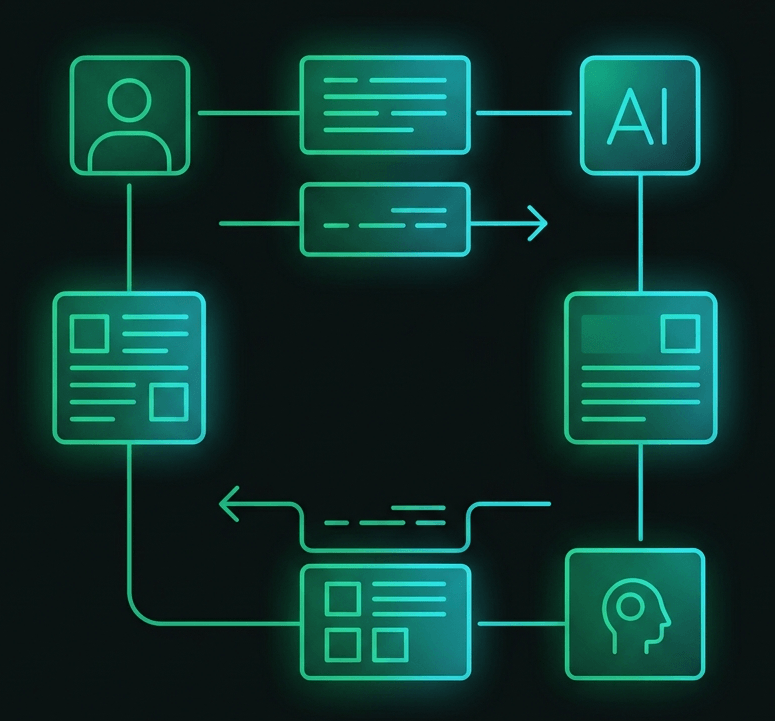
The API is stateless. This is the most important property to grasp. Anthropic’s servers keep nothing between calls; each request is judged only on what it contains. There is no server-side memory of earlier messages. That is why multi-turn conversations work by resending the whole conversation each time: the “memory” lives in your application, which replays the history on every call.
Requests carry their settings. Alongside the messages, a request specifies things like which model to use, a required limit on response length, and optional controls such as temperature. Beyond these stable basics, the specific parameters, limits, model names, and newer options change over time, so for exact current values the authoritative source is Anthropic’s official documentation. What is stable is the shape: a model, a list of turns, a system prompt, and a handful of settings.
A concrete example
Imagine building a customer-support assistant.
Each time a customer sends a message, your application makes a Messages API call: it includes a system prompt defining the assistant’s role and rules, the full conversation so far, and the customer’s new message, then receives Claude’s reply to show them. On the next message, because the API remembers nothing, your application sends the whole updated conversation again. The assistant feels continuous to the customer, but that continuity is created by your code replaying the history, not by the API holding it. That single pattern underlies most applications built on Claude.
How it connects
The Messages API is where several concepts in this library become concrete. The system prompt and each turn are prompts; everything you send in one request together forms the context the model sees; the API’s statelessness is the reason a product must manage context itself. It is also how tool use is wired up in practice, by describing tools in the request.
For the building roles it is fundamental plumbing. An AI/LLM Developer works with it directly every day, and an AI Solutions Architect designs systems around its shape, especially the fact that managing conversation state is the application’s job, not the API’s.